

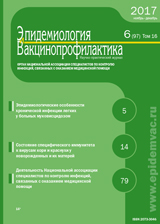
The journal "Epidemiology and Vaccinal Prevention" is a member of Noncommercial partnership "National Association of the Specialists in Control of Health Care-Associated Infections", established with the participation of the All-Russian Scientific and Practical Society of Epidemiologists, Microbiologists and Parasitologists.
The primary focus is contributing to the development of medical science and practice. The target audience is medical society including medical students.
Much attention is commonly paid to topics related to all aspects of immunization and epidemiology of communicable and non-communicable diseases. The number of publications dedicated to general and particular issues of healthcare-associated infections (HAI), HAI terminology and classification, laboratory diagnostics of diseases at medical institutions and HAI prevention has recently increased.
Principal sections: Problem-Solving Article; Original Articles; Anti-Epidemic Practice; Vaccination Practice; Review; Discussion; WHO Information.
The editorial board and editorial council consist of reputable Russian and foreign scientists: 11 Fellows of the Russian Academy of Sciences and foreign academies, 4 Corresponding Members of the Russian Academy of Sciences and foreign academies, and 39 professors.
Scientific articles and reviews are double blind peer reviewed.
Articles are submitted electronically (www.epidemvac.ru) in accordance with article submission requirements. See “Author Guidelines” for correct submission of your article.
The editors of the journal in their work comply with generally accepted ethical standards.
"Epidemiology and Vaccinal Prevention" fully complies with State Commission for Academic Degrees and Titles requirements for scientific journals, and in 2004 was included in the “List of leading peer-reviewed scientific journals and publications in which the main scientific results of the dissertation for the degree of doctor and candidate of science should be published”. In 2015 the journal was included in the current updated list of peer-reviewed scientific publications.
"Epidemiology and Vaccinal Prevention" was registered by the Press Committee of the Russian Federation on 10.10.2000 under No. 011096. In December of 2016 the journal was re-registered by the Federal Service for Supervision of Communications, Information Technology, and Mass Media – Print Media Registration Certificate No. ФС 77-68159 dated December 21, 2016.
International Standard Serial Number (ISSN) – 2073-3046.
The journal is issued quarterly (6 issues per year), volume – 96–112 pages of A4 size.
Subscription is available in the entire territory of the Russian Federation and CIS countries: subscription index in Rospechat catalog – 20140.
In April of 2012 "Epidemiology and Vaccinal Prevention" was included in Ulrich's Periodicals Directory.
In August of 2017 the journal was included in EBSCO
Current issue
PROBLEM-SOLVING ARTICLE
Relevance. In April 2026, an outbreak of hantavirus infection caused by Andes virus (Orthohantavirus andesense) was reported on the expedition vessel MV Hondius, which had departed from the port of Ushuaia, Argentina, on 1 April 2026. Clinical symptoms in the first affected passenger appeared on 6 April, and the patient died on board the vessel on 11 April. In the following weeks, severe cases were identified among passengers and crew members after some individuals had disembarked and subsequently travelled through several countries. Aim. To assess the epidemiological and genomic characteristics of the outbreak and identify lessons for biosafety systems. Materials and Methods. We analyzed data from the epidemiological investigation provided by WHO and national health authorities. Genomic sequencing was performed using metagenomic approaches, SISPA, and hybridization enrichment. Phylogenetic analysis was conducted using the maximum likelihood method in IQ-TREE 3. Results and Discussion. Following outbreak investigation and diagnostic testing of patients in different countries, a total of 13 cases of infection were identified including 11 laboratory-confirmed cases, 2 probable cases, and 3 deaths. The epidemiological investigation suggests primary zoonotic infection of the index patient before boarding the vessel in an endemic area of southern Argentina, followed by limited person-to-person transmission on board. Genomic analysis demonstrated a high degree of identity among viral sequences obtained from affected individuals, which is consistent with a single introduction followed by subsequent human-to-human transmission. Conclusions. The hantavirus outbreak on board MV Hondius represents an important example of an epidemiologically significant event in which a zoonotic pathogen with limited capacity for person-to-person transmission occurred within a closed international community. This event highlights the importance of early clinical diagnosis, sanitary and quarantine measures for contact persons, and rapid international exchange of genomic data to ensure biosafety during epidemic events caused by emerging, rare, or genetically altered pathogens.
ORIGINAL ARTICLES
Background. Haemophilus influenzae infection remains a significant cause of infectious morbidity in the Russian Federation, particularly among the pediatric population. Aim. To characterize the features of the epidemic process of Haemophilus influenzae infection in 2019–2025 and to substantiate directions for optimizing surveillance measures. Materials and Methods. Data were collected using specially designed tables that included information on vaccination history, age structure, clinical forms, social groups of cases, diagnostic methods, and serotyping results. Based on the information obtained, a retrospective epidemiological analysis was performed. The study covered the period from 2019 to 2025. To assess morbidity dynamics and preventive vaccination coverage, monthly and annual statistical reporting Forms No. 2 ("Data on Infectious and Parasitic Diseases") and annual Forms No. 6 ("Data on Populations of Children and Adults Vaccinated Against Infectious Diseases") for the specified period were used [30, 32]. To study population immunity to Haemophilus influenzae infection, serological testing of blood serum samples was performed. Results and Discussion. It was established that, despite achieving a high level of vaccination coverage against Hib infection in the pediatric population (over 95%), a steady increase in morbidity has been observed in 2022–2025: in 2025, it reached 4.25 per 100,000 population, exceeding the long-term average level by a factor of 19.3. A shift in morbidity toward older age groups (50–65 years) was revealed, along with a change in the clinical structure characterized by a predominance of pneumonia (up to 94.5%) and the registration of fatal outcomes among the adult population. At the same time, against the background of routine immunization of children in the first years of life against serotype b, initiated in 2022 within the National Calendar of Preventive Vaccinations, the proportion of purulent bacterial meningitis (PBM), which had previously reached 20% among the clinical forms of Haemophilus influenzae infection, decreased to 1.5% over the past three years. The current surveillance system does not provide for serotyping of H. influenzae strains, which makes it impossible to conduct full-scale epidemiological surveillance of this infection. The results of serological analysis confirm extensive circulation of the pathogen in the population. Conclusion. The increase in the incidence of Haemophilus influenzae infection is presumably attributable to the loss of natural population immunity resulting from social distancing measures during the COVID-19 pandemic; to an increase in registered morbidity due to the introduction of highly sensitive PCR systems; and to the biological process of serotype replacement, whereby non-vaccine H. influenzae strains have come to occupy a dominant position in the etiological structure. At the same time, the high level of coverage and timeliness of vaccination of children in the first years of life against Hib infection made it possible to reduce the proportion of invasive forms of the disease caused by this pathogen. Priority directions for the development of epidemiological surveillance include the introduction of PCR panels for pathogen detection, standardization of serotyping methods, and the establishment of serological monitoring of postvaccination immunity. In addition, it is advisable to consider revaccination against Hib infection for persons in risk groups, including those over 50 years of age.
Relevance. Chronic viral hepatitis B and C continue to be a major public health issue in the Russian Federation as incidence rates remain high despite all measures implemented by the healthcare system. Aims. Тo evaluate the impact of the incidence of drug addiction, alcoholism and sexually transmitted diseases on the incidence of chronic hepatitis B and C in the Far Eastern Federal District. Materials and methods. A retrospective analysis of chronic hepatitis B and C incidence in the Far Eastern Federal District and its constituent entities was performed. Linear regression was used to assess the influence of drug and alcohol addiction incidence and sexually transmitted diseases incidence on the incidence of chronic hepatitis B and C in the territories of the Far Eastern Federal District that had pressing epidemiological situation. Results. Chronic viral hepatitis B and C incidence in the Far Eastern federal district amounted to 10.7 and 31.7 per 100 thousand of population in 2024, respectively. Chronic hepatitis B and C incidence during 2011–2017 followed a pronounced linear trend with mean annual decline rates of 11.5 % and 12.1 % respectively. The trend changed during 2020 –2024: a steady increase of the examined indices was observed, reaching 24.0 % for chronic hepatitis B and 20.5 % for chronic hepatitis C. Regression analysis revealed significant predictors of chronic viral hepatitis in the territories of the district where incidence rates exceeded the Far Eastern federal district average in 2024. An association between syphilis and chronic viral hepatitis B incidence was observed in the Republic Sakha (Yakutia) during 2015–2024. A relation between incidence of alcoholism and alcoholic psychosis and chronic viral hepatitis C infection rate was revealed in the Jewish Autonomous Okrug (2015–2024) and Primorsky Krai (2018–2024). A change of predictors was observed in the Primorsky Krai: gonococcal infection contributed significantly to chronic viral hepatitis C incidence during 2011–2017. Conclusion. Downward trends of chronic hepatitis B and C incidence rates were revealed in the Far Eastern federal district. The incidence rates were comparable to mean nationwide levels in 2024. Implementation of the results of regression analysis can be perspective in the development of preventive measures and awareness programs, particularly in regions with high incidence levels of chronic viral hepatitis.
Relevance. Patients with severe bronchial asthma (SBA) receiving genetically engineered biological therapy (GEBT) are at increased risk of a complicated course of influenza. Data on the tolerability of adjuvanted influenza vaccines in this category of patients are limited. Aim. To study the frequency, structure, and predictors of post-vaccination reactions to the administration of a quadrivalent adjuvanted subunit influenza vaccine in patients with SBA while receiving GEBT. Materials and methods. A prospective observational cohort study was conducted with the participation of 221 patients (19–81 years old) with SBA (GINA 2026, stage 5) who received dupilumab, omalizumab, benralizumab or mepolizumab for at least 3 months. All patients were vaccinated with a single intramuscular dose of a quadrivalent adjuvanted subunit influenza vaccine. Post-vaccination reactions were recorded using individual questionnaires. Statistical analysis included logistic regression. Results. The frequency of local reactions was 38.9 % (mainly pain at the site of injection – 24.9 %), systemic – 41.6 % (mainly weakness/malaise – 24.0 %). All reactions were mild and short-term. There were no differences in the frequency of reactions between the age groups (<60 and ≥60 years) and by gender. In the post-vaccination period, no exacerbations of asthma, bacterial complications, or delays in the administration schedule of GEBT were recorded. Independent predictors of systemic reactions were chronic respiratory diseases (COPD/bronchitis): OR = 7.53 (p = 0.007) and allergic/atopic diseases: OR = 4.28 (p = 0.001). Conclusion. Vaccination of patients with SBA receiving GEBT with adjuvanted quadrivalent influenza vaccine is characterized by a favorable safety profile and does not require correction of basic therapy. Chronic respiratory and allergic diseases are independent risk factors for the development of systemic post-vaccination reactions.
Relevance. Invasive meningococcal disease (IMD) is one of the most dangerous infectious diseases due to its rapid progression and high risk of fatal outcomes, with infants in their first year of life, starting from the first months, being at greatest risk. Evaluation of the safety and efficacy of co-administration of meningococcal conjugate vaccine MenACWY-TT with pediatric vaccines is necessary for its potential use in the immunization program for infants. Aims. To evaluate the immunogenicity and safety profile of MenACWY-TT vaccine administered according to a 2+1 schedule (vaccination at 3 and 6 months, booster at 12 months), when co-administered with National Immunization Schedule vaccines in healthy children in the Russian Federation. Materials and Methods. An open-label, randomized, multicenter, active-controlled Phase III study was conducted at 8 centers in the Russian Federation. The immunogenicity and safety of MenACWY-TT immunization according to a 2+1 schedule at 3, 6, and 12 months of age co-administered with National Immunization Schedule vaccines, were studied. The study enrolled 225 healthy infants who were randomized in a 2:1 ratio to the MenACWY-TT + routine vaccines group (n = 150) or the comparator group receiving routine vaccines only (n = 75). Immunogenicity against meningococcal serogroups A, C, W, and Y was determined by serum bactericidal assay using human complement (hSBA), and in a subset of vaccinated participants, additionally with rabbit complement (rSBA). Safety was assessed for 30 days after each injection; monitoring for serious adverse events (SAEs) continued until the final visit—30 days after the booster dose at 12 months. Results. At 30 days after the booster dose (12 months), the proportion of participants with seroprotection (hSBA ≥ 1:8) in the MenACWY-TT group was 89.6 % (serogroup A), 82.3 % (C), and 80.2 % (Y and W); in post-hoc analysis excluding one center (at which significantly different values were recorded compared to other sites) – ≥ 93.8 % for all serogroups. After the primary series (at 6 months), serological response was achieved in 70.1–94.8 % of participants. The immunogenicity of routine vaccines when co-administered was comparable to the comparator group. Local reactions to MenACWY-TT (erythema 7.4 %, tenderness 6.0 %) were mild or moderate in severity. Serious adverse events (SAEs) were reported in 2.7 % of participants in both groups, with no established relationship to vaccination. Conclusion. The MenACWY-TT vaccine administered according to a 2+1 schedule from the first months of life demonstrated good immunogenicity and a favorable safety profile when co-administered with pediatric vaccines of the National Immunization Schedule for routine immunization of infants.
Relevance. Many countries in the world with high coverage of preventive vaccinations have seen an increase in the incidence of pertussis since the 1980s. The sharpest rise in the incidence of pertussis in the world has been recorded since 2023–2024. In recent years, the number of cases of pertussis caused by B. parapertussis has been increasing, which may be due to vaccination pressure, lack of cross-immunity, as well as the widespread use of PCR diagnostics. B. parapertussis does not produce pertussis toxin, but it is characterized by virulence factors similar to B. pertussis. Aims. To show the role of B. parapertussis in the epidemiology of pertussis and to analyze the clinical and epidemiological features of a pertussis outbreak caused by B. parapertussis. Material and methods. The study includes official statistical data and analytical materials obtained as part of the work of the Reference Center for Pertussis Monitoring of the G. N. Gabrichevsky Research Institute of Epidemiology and Microbiology, Rospotrebnadzor, as well as maps of the epidemiological examination of the focus, medical documentation for patients and laboratory tests. The PCR study was carried out using two sets of reagents AmpliSence Bordetella multi-FL (FBUN TsNIIE, Russia) and AmpliPrime Bordetella (NecstBio LLC, Russia). Statistical data processing was performed using Microsoft Excel 2019. Results. The incidence of whooping cough caused by B. parapertussis in the Russian Federation over the past 10 years does not exceed 2.0 per 100 thousand population. Among the sick, the proportion of children 0-17 years old was at the level of 88.8 % – 98.8 %. The highest age indicator was in children under 1 year old in 2016–2021 and 2023–2024 and children 3–6 years old in 2022 and 2025. The largest number of cases is recorded in children 7–14 years old. In 2025, the number of cases in children 3-6 years old increased sharply. In 2025, 186,005 studies for pertussis were performed in the Russian Federation with a predominance of using PCR diagnostics (55.5 %). During the period of rising incidence (2019 and 2023), B. pertussis dominates the structure of pathogens and since 2025 the share of B. parapertussis circulation has increased to 30 %, including by epidemiological indications to 40.0 %. As an example of an epidemiological examination, a description of an acute focus with multiple cases of the disease in a preschool institution is given. Conclusion. Whooping cough caused by B. parapertussis is reported annually and predominantly in children. An increase in the specific gravity of B. parapertussis among pertussis pathogens was shown against the background of a decrease in the incidence in 2024–2025. The analysis of the focus revealed the predominance of an erased course (in four children) and bacteriocarrier (in three children), and also confirmed the high diagnostic efficiency of PCR when examining foci of pertussis.
Relevance. Decades of mass immunization against diphtheria and tetanus have led to a decline in the incidence of these infections to sporadic levels. But the risk of infection continues to this day. Aims. To assess the level of antitoxic post-vaccination immunity to diphtheria and tetanus in the adult population, taking into account the vaccination history. Materials and methods. The results of studies of the level of IgG antibodies to diphtheria and tetanus toxoids in the adult population of the Republic of Karelia, examined in 2008 (103 people) and in 2022–2024 (1017 people), were analyzed. Laboratory studies were carried out using the micromethod in the passive hemagglutination reaction. Blood samples were taken without taking into account vaccination history. Persons with an antibody titer of less than 1:20 were considered seronegative. The results of the study of samples from 103 people in 2008 and 400 people in 2022-2024, were compared with data on the receipt of the latest diphtheria and tetanus vaccination. Results. Of 103 people examined in 2008, 2.9 % were seronegative for diphtheria and 3.9 % for tetanus. All seronegative patients were over 50 years of age. 82.5 % of those examined had an antibody titer of ≥ 1:320 to diphtheria and 86.4 % to tetanus. Within 5 years before the study 58.3 % were vaccinated, 6–10 years – 37.9 %, 11–14 years – 3.9 % of those examined. The vast majority of those examined had an antibody titer of ≥ 1:320, regardless of the time elapsed since the last vaccination. 3.9 % of those vaccinated less than 11 years ago were seronegative for diphtheria, and 2.9 % for tetanus. Of 1017 individuals examined in 2022–2024, the proportion of seronegative for diphtheria was 1.2 %, for tetanus – 0.8 %. The frequency of detection of antibodies in titers of 1:320 and higher to diphtheria is 88.0 %, to tetanus – 97.6 %. In persons over 50 years of age, the frequency of lack of protective antibody levels to both infections was slightly lower than in persons 20–49 years of age. Of 400 people, 39.5 % were vaccinated within 5 years before the study, 6–10 years old – 46.8 %, 11–18 years old – 13.8 % of people. Among those reliably vaccinated, 1.0 % were found to be seronegative for diphtheria and none for tetanus. 88.5 % had antibodies in a titer of 1:320 and higher to diphtheria, and 98.3 % to tetanus. More than 90 % of them were individuals with a titer of 1:2560 and 1:5120 to both toxoids. In 85 individuals who did not reliably receive an additional dose of tetanus toxoid after revaccination with ADS-M toxoid, the geometric mean titer of antibodies to tetanus (11.7 log2, 1:3397) was higher than to diphtheria (11.0 log2, 1:2048), but in both cases they were many times higher than the protective level. Conclusions. The study showed a high level of seroprevalence for diphtheria and tetanus in all age groups of the adult population, which confirms the data on high immunization coverage. In the majority of those examined, regardless of the time elapsed since the last vaccination (within 18 years), the antibody titer to both infections exceeded 1:320. The level of antitoxic antibodies to tetanus was slightly higher than to diphtheria.
Relevance. The Southern Urals is an endemic region for tick-borne encephalitis (TBE), where the Siberian subtype of the virus has historically been dominant, represented by the Zausaev lineage. The 2025 identification of the Baltic lineage marks a shift in the established epidemiological paradigm. Aim. To investigate the molecular epidemiology of the Siberian genotype of TBE virus in the Southern Urals, the clinical polymorphism of the disease, and the effectiveness of various prevention strategies in the context of the identified genetic diversity of the pathogen. Materials and Methods. A continuous longitudinal study was conducted on a series of verified TBE cases among patients hospitalized in the Infectious Diseases Department of City Clinical Hospital No. 8 in Chelyabinsk between 2024 and June 30, 2026. To genetically characterize the agent, sequencing of a fragment of the viral protein E gene was performed, followed by phylogenetic analysis. Results and Discussion. The proportion of focal forms was 11.3 %, and the case fatality rate was 5.0 %. Among the 4 deceased patients, 3 received post-exposure immunoglobulin. The Baltic lineage of the Siberian subtype was detected in one fatal case. In the vaccinated, there were no focal forms of tick-borne encephalitis or fatal outcomes. Conclusion. The study revealed an expansion of the Baltic lineage in the region. While emergency post-exposure prophylaxis with immunoglobulin did not prevent severe disease and fatal outcome upon infection with highly virulent strains, vaccination was found to provide reliable protection.
PRACTICAL ASPECTS OF EPIDEMIOLOGY AND VACCINE PREVENTION
Relevance. Healthcare-associated infections (HAIs) remain a significant threat to patients and healthcare systems, with the contact transmission route–accounting for up to 60–70 % of all HAIs–being the predominant mode of spread. Objective. To evaluate the effectiveness of antimicrobial coatings developed by the FGBU “A.N. Frumkin Institute of Physical Chemistry and Electrochemistry” of the Russian Academy of Sciences in a hospital setting. Materials and Methods. A clinical study was conducted in an intensive care unit over a 5-month period to assess the efficacy of four types of antimicrobial coatings: stainless steel (C), smooth copper (M), lasertextured copper (CuT), and CuO/TiO₂ composite coating (A) on 24 high-touch surfaces. A total of 1440 surface swabs were analyzed using cultural methods and MALDI-TOF mass spectrometry. Results and Discussion. Laser-textured copper (CuT) demonstrated the highest overall antimicrobial efficacy: bacterial contamination levels were 26.8 times lower than on stainless steel surfaces, and the frequency of Staphylococcus aureus isolation was 43 times lower. The CuO/TiO₂ composite, despite exhibiting higher overall bacterial load (2.15 times higher than CuT), showed the lowest frequency of S. aureus detection (1.7 %). All experimental coatings consistently reduced microbial burden compared to control surfaces without requiring changes to routine disinfection protocols. The use of self-adhesive copper foils enables easy installation, durability, and cost-effectiveness. Conclusion. This study confirms that copper-based coatings – particularly laser-textured copper and the CuO/TiO₂ composite—are effective barriers that significantly reduce bacterial contamination on high-touch surfaces in hospital settings, where healthcare workers’ hands remain the primary vector for HAI transmission. These passive antimicrobial surfaces do not replace, but significantly enhance, conventional infection control measures, contributing to a multi-layered strategy for HAI prevention in real-world clinical environments.
Relevance. Breast milk is the optimal nutrition for infants during the first 6 months of life. However, many viruses can enter breast milk and be transmitted from mother to newborn during breastfeeding. Holder pasteurization is the most studied and recommended method of heat treatment of breast milk, achieving an acceptable compromise between microbiological safety and biological quality. Small units are also convenient for pasteurizing milk from a specific donor. Aims. To evaluate the virucidal activity of a portable breast milk pasteurizer against human adenovirus 5 (hAdV-5), a model non-enveloped resistant virus, and human immunodeficiency virus 1 (HIV-1), a model enveloped virus and potential contaminant. Materials and Methods. Breast milk samples were artificially contaminated with HIV-1 (strain NL4-3) or hAdV-5 (strain 14286) and processed in the studied pasteurizer at 62.5 °C for 30 minutes (Holder pasteurization). The efficiency of inactivation was assessed by the reduction of infectious viral titer and the content of viral genomes (using Real-time PCR/RT-PCR). Results. Processing in the pasteurizer resulted in complete inactivation of HIV-1: the infectious titer decreased to an undetectable level (R ≥ 4.0 log10, > 99.99 % reduction), and the content of viral RNA decreased by more than 2 log10 (> 99 %). For hAdV-5, a significant reduction in infectivity of 2.97–3.34 log10 (about 99.9 %) was observed, while the viral DNA reduction was less pronounced (0.69–0.80 log10), but statistically significant. Conclusion. The portable breast milk pasteurizer demonstrates effective inactivation of HIV-1 (> 99.99 %) and a significant infectivity reduction (> 99 %) in human adenovirus 5 in breast milk in vitro. However, 99.99 % adenovirus inactivation efficiency, as required by the current standard (R 4.2.3676-20), was not achieved.
Relevance. Despite the proven effectiveness and cost-efficiency of immunoprophylaxis as a cornerstone of public health, its perception has become increasingly heterogeneous in contemporary settings, with vaccine hesitancy now recognized as a major global health threat. Conventional questionnaire-based methods for assessing attitudes toward vaccination often capture socially desirable responses, thereby limiting the detection of underlying cognitive patterns. Aim. This study aimed to evaluate the potential of natural language processing (NLP) techniques applied to associative word chains – elicited through open-ended interviews – as an auxiliary tool for communicative monitoring in the field of vaccination. Materials and Methods. The research involved 90 human respondents (45 adolescents aged 12–17 years and 45 adults aged 20–68 years), recruited via snowball sampling, and 532 virtual respondents generated by the Qwen2-7B-Instruct large language model. Participants were asked to provide up to 10 free associations to 14 stimulus words (12 vaccine-preventable diseases from the Russian National Immunization Schedule, plus the terms «vaccination» and «inoculation»), without any quantitative or qualitative restrictions on lexical choices. In total, we analyzed 65 320 associations. We applied lemmatization, clustering, and sentiment analysis using the «cointegrated/rubert-tiny-sentimentbalanced» model. Statistical analyses included the Mann–Whitney U test, Pearson’s chi-squared test, and odds ratio calculations (p <0.05). Data processing was performed using StatTech 4.10.3 and Python 3.11. Results and Discussion. Human respondents rarely completed full 10-word chains (47.3 % completion rate), whereas the AI consistently generated all 10 responses – though some contained unreadable symbols and were excluded. From all responses, we compiled a lexicon of 4 096 unique words and phrases; lexical overlap between adolescents and adults reached 23.6 % (30.7 % among AI-generated responses). Positive and negative associations appeared with roughly equal frequency overall, and semantic field alignment occurred in 28.1 % of cases. All associations clustered into four thematic categories: «Disease Characteristics», «Vaccination», «Danger», and «Other». Regardless of age or respondent type, the first association typically reflected «Disease Characteristics», while references to vaccination emerged mainly from the second or third response onward. Adults produced significantly more vaccination-related associations than adolescents. Moreover, the presence of at least one term from the «Vaccination» cluster increased the odds of a high selfreported attitude toward immunization (on a 10-point scale) by 4.3 times (p = 0.021). Sentiment analysis revealed an overall ratio of 1.68 positive to every negative association; however, human respondents exhibited stronger sentiment polarization, whereas AI responses leaned toward neutrality — likely due to media-driven constraints on publishing negative content about vaccines. Although participants generally reported highly favorable attitudes toward vaccination (median = 9 [IQR: 7–10]), sentiment analysis of their associative responses indicated only a moderate level of acceptance. Conclusion. The findings demonstrate that the chain associative experiment, when combined with NLP methods, can effectively complement traditional tools of communicative monitoring by uncovering latent cognitive structures and offering a more nuanced assessment of vaccination acceptance. Consequently, integrating this approach into epidemiological surveillance systems appears both feasible and methodologically justified.
Background. Human papillomavirus (HPV) causes 4.5 % of all new cancer cases worldwide, including cervical cancer. Cervical cancer accounts for the vast majority (83 %) of HPV-associated cancers. Aim. To evaluate the first results of the immunization campaign against human papillomavirus in girls aged 10–14 years in the context of increasing incidence of cervical cancer in the Republic of Tajikistan. Materials and Methods. The study analyzed statistical data and reports from the Republican Center for Immunoprophylaxis on the progress of HPV immunization in the republic, as well as on the incidence of cervical cancer, obtained from various specialized medical institutions for the period 2014–2025. Results and Discussion. In 2025, 434 new cases of cervical cancer were registered in the Republic of Tajikistan, with a prevalence rate of 4.1 cases per 100,000 women. Over the past five years (2021 to 2025), this rate has increased by 1.5 times. This annual increase is due to the expansion of visual screening coverage under the state program, as well as a possible increase in actual incidence. Since July 2025, the Republic of Tajikistan has become the 53rd country in the WHO European Region to introduce HPV vaccination into its National Immunization Program. The government officially announced the launch of an HPV vaccination campaign for girls aged 10–14 years on October 1, 2025. The preferred vaccination regimen for Tajikistan is the single-dose quadrivalent Gardasil® vaccine, manufactured by Merck & Co. (USA). Thanks to collaboration with GAVI, Tajikistan received 623,000 doses of this vaccine. As of October 31, 2025, the number of girls aged 10–14 vaccinated nationwide reached 95.4 % of the target population, or 522,134 girls. The range of vaccination coverage across all regions of the country ranged from 94.9 % to 96.9 %. During the specified period, 48 cases of adverse reactions after immunization against HPV were registered, which amounted to 0.009 %. The most common symptoms were: weakness/malaise (n = 15; 31.25 %); redness of the skin/face (n = 10; 20.8 %); nausea (n = 8; 16.7 %); fainting (n = 7; 14.6 %); increased body temperature (n = 7; 14.6 %) and collapse (n = 5; 10.4 %). Conclusion. Introduction routine HPV vaccination in the National Immunization Schedule of the Republic of Tajikistan is a prudent and strategically important step. Implementing these measures creates the foundation for achieving national and international goals to eliminate cervical cancer and improve the reproductive and public health of women in the country.

ISSN 2619-0494 (Online)





